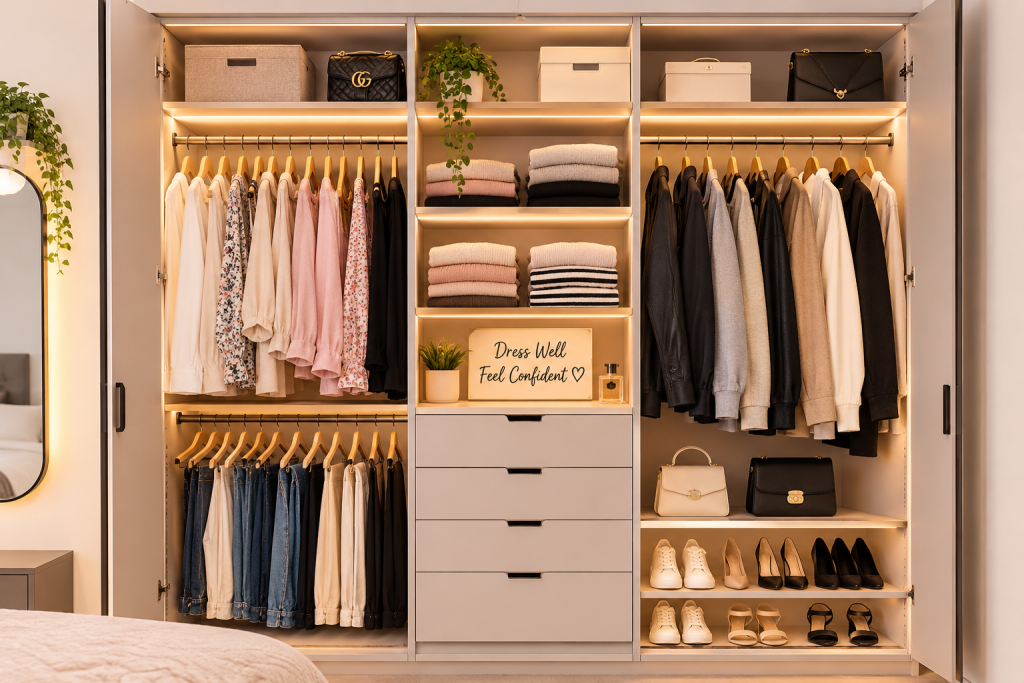
A perfect wardrobe is not about owning the most clothes—it is about owning the right clothes. It is a collection of pieces that fit well, suit your lifestyle, mix easily with one another, and make getting dressed feel effortless rather than stressful. Whether you are a student, a working professional, or someone simply tired of standing in front of a full cupboard with “nothing to wear,” building a thoughtful wardrobe can change the way you feel about your clothes.
The secret lies in balance: a few timeless basics, a few personality-driven pieces, and clothes that genuinely fit your everyday life. A capsule-style wardrobe is often built around versatile neutrals and classic essentials, allowing each item to create multiple outfit combinations.
Start With Your Real Life
Before buying anything new, look honestly at how you spend your days. Do you attend college or work in an office? Do you travel often? Are your weekends filled with casual outings, family events, or social gatherings? Your wardrobe should reflect your routine, not an imaginary version of your life. Experts recommend beginning by identifying where you spend most of your time and building around the outfits you will actually wear most often.
Make a simple list of your regular activities. For example, if you spend most days in classes or casual workplaces, comfortable jeans, breathable tops, sneakers, and one smart jacket may matter more than a cupboard full of formal wear. If you attend formal events frequently, invest more in tailored trousers, shirts, blazers, or elegant dresses.
Also think about your local climate. In a city like Delhi, lightweight cottons, breathable fabrics, and layering pieces are useful for much of the year, while a few warmer layers are important during winter. Clothes that fit comfortably and suit your climate are more likely to become everyday favourites.
Clear Out What No Longer Works
A perfect wardrobe begins with editing, not shopping. Take everything out of your cupboard and divide it into four categories: keep, repair, donate or sell, and discard. Be honest with yourself. If you have not worn something in over a year, it does not fit, or it makes you feel uncomfortable, it may be taking up space that better pieces deserve.
Keep the clothes you reach for repeatedly. These are usually the true building blocks of your personal style. Fashion editors often suggest identifying the pieces you naturally choose when you are in a rush, because those items reveal what actually works for your body, lifestyle, and taste.
Do not throw away something only because it is old. A well-loved pair of jeans, a classic shirt, or a quality jacket can still be a wardrobe hero if it fits well and is in good condition. Repair loose buttons, fix hems, and get pieces tailored if needed. Sometimes, a small alteration can make an ordinary garment look far more expensive and polished.
Build Around a Colour Palette
One of the easiest ways to make a wardrobe feel coordinated is to choose a simple colour palette. You do not need to wear only black, white, and beige, but having a base of neutral shades makes mixing and matching much easier.
Popular foundation colours include:
- White and off-white
- Black
- Navy blue
- Grey
- Beige, cream, and brown
- Olive green
Once your basics are in place, add two or three accent colours that genuinely suit you. This could be a warm red, a soft pink, a deep green, or a bright blue. The goal is not to eliminate colour—it is to make sure your clothes work together instead of competing with each other.
A cohesive palette helps you create more outfits from fewer pieces. Versatility and neutral colours are often considered essential building blocks of a capsule wardrobe, while accent colours add individuality.
Invest in Strong Basics
Basics are the foundation of a perfect wardrobe. These are the pieces you can wear again and again without them looking repetitive, especially when styled differently.
A practical starting point includes:
- Well-fitting jeans in a dark or medium wash
- Comfortable trousers or tailored pants
- Plain T-shirts in white, black, and neutral shades
- A crisp white shirt or button-down
- A few quality kurtas or casual shirts, depending on your style
- A versatile dress or co-ord set
- A structured blazer or smart jacket
- A denim jacket or lightweight outerwear
- Comfortable everyday footwear
- One pair of dressier shoes for formal occasions
A white button-down, tailored trousers, well-fitting denim, simple tees, and versatile shoes are frequently recommended as timeless essentials because they can be styled across casual, work, and social settings.
The key is fit. A basic T-shirt that fits your shoulders, waist, and length properly will always look better than an expensive piece that feels uncomfortable or unflattering. Do not chase a size label; choose what feels right on your body.
Add Personality, Not Just Trends
A wardrobe made only of basics can feel practical, but it may also feel incomplete. Your personal style comes from the details: the colours you love, the prints you enjoy, the accessories you choose, and the silhouettes that make you feel confident.
Add a few statement pieces that reflect your personality. This could be a brightly coloured scarf, a printed kurta, a bold handbag, statement earrings, a patterned shirt, or a pair of shoes that instantly lifts a simple outfit. These pieces do not need to be numerous. Even a small selection can make your everyday basics feel fresh and distinctive.
Before buying something trendy, ask yourself one question: “Can I style this with at least three things I already own?” If the answer is no, it may look great in the store but become difficult to wear later. A useful rule is to choose new items that coordinate with several existing pieces, suit your routine, and are easy to maintain.
Trends can be fun, but they should not control your entire wardrobe. Buy trends in small doses and spend more on classic pieces you expect to wear for years.
Choose Quality Over Quantity
It is tempting to buy many inexpensive clothes, especially when sales are everywhere. However, a wardrobe filled with poorly made pieces often leads to more spending over time. Fabrics lose shape, colours fade, stitching comes loose, and items quickly stop looking good.
Instead, focus on quality where it matters most: jeans, outerwear, shoes, bags, and everyday basics. These are the pieces you wear frequently, so durability makes a real difference. Quality does not always mean luxury pricing; it means choosing fabrics that feel good, checking stitching, and selecting designs that will remain wearable beyond one season.
A smaller collection of well-made, versatile clothing is usually more useful than a cupboard overflowing with clothes you rarely wear. Many wardrobe guides emphasise choosing pieces that can be dressed up or down and layered in different ways.
Create Outfits, Not Just Collections
A perfect wardrobe is not only a list of clothes—it is a system of outfits. After buying or organising your essentials, try creating complete looks rather than thinking only in terms of individual items.
For example, a white shirt can be worn with jeans and sneakers for a casual day, tucked into tailored trousers with loafers for a smarter look, or layered under a blazer for a formal setting. A simple black dress can work with a denim jacket and sandals during the day, then change character with heels and jewellery at night.
Try this exercise: choose ten pieces from your wardrobe and create outfits for an entire week. This helps you identify gaps, such as needing better layers, more neutral bottoms, or one versatile pair of shoes. Practising outfit combinations from a small set of staples is a common way to test whether a wardrobe is truly functional.
Organise Your Wardrobe Thoughtfully
Once you have curated your clothes, organisation makes them easier to use. Group similar items together: tops with tops, jeans with jeans, dresses with dresses, and outerwear with outerwear. Keep your most-worn pieces at eye level and store seasonal clothing separately if space is limited.
Use matching hangers if possible, fold knitwear instead of hanging it, and keep accessories visible rather than buried at the bottom of a drawer. When you can see what you own, you are more likely to wear it.
A simple trick is to turn all your hangers in the same direction. Each time you wear an item, turn its hanger the other way. After a few months, you will clearly see which clothes you actually use and which ones are simply occupying space.
Take Care of What You Own
Building a perfect wardrobe also means protecting it. Follow washing instructions, avoid over-washing delicate pieces, air-dry clothes when possible, and store seasonal items properly. Good care helps clothes last longer and keeps them looking fresh.
Keep a small repair kit at home with needles, thread, buttons, and fabric glue. Small repairs can extend the life of a favourite garment and prevent you from replacing something unnecessarily.
Conclusion
A perfect wardrobe is not built in one shopping trip. It grows gradually, shaped by your lifestyle, body, budget, climate, and personal taste. Start by clearing out what no longer serves you, invest in versatile basics, choose a colour palette that works for you, and add a few pieces that express your personality.
The goal is not to own less for the sake of it, nor to own more just because something is on sale. The goal is to own clothes that make sense for your life and make you feel confident every time you get dressed. When every piece in your wardrobe has a purpose, getting ready becomes simpler, your outfits look more intentional, and your personal style finally begins to feel like your own.