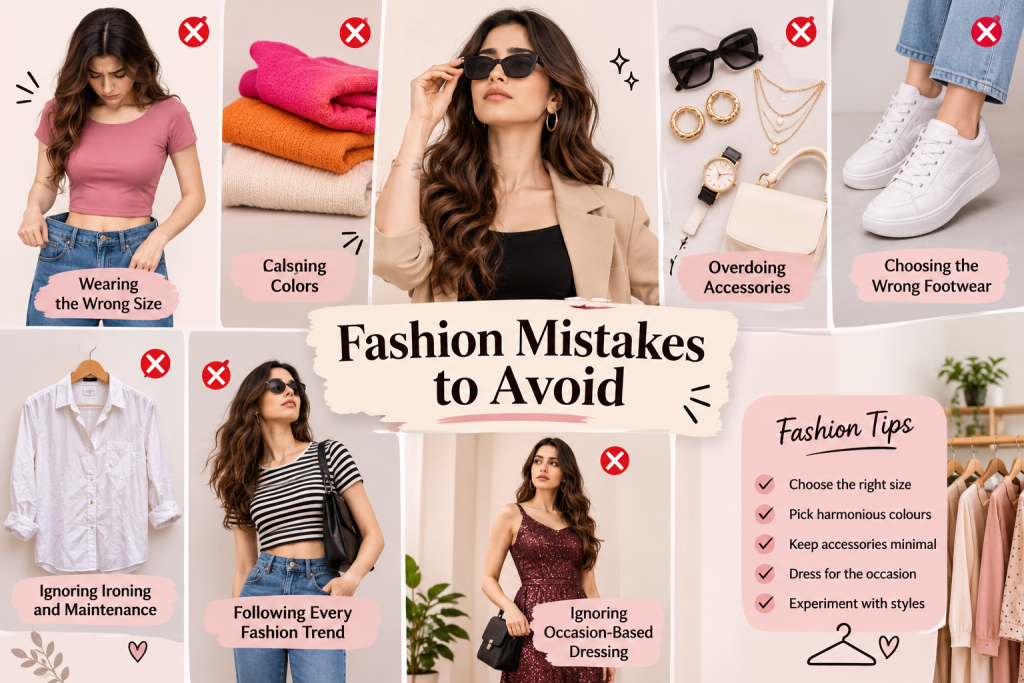
Fashion is not about owning the most expensive clothes or copying every trend that appears online. It is about understanding what suits your body, lifestyle, personality, and the occasion. A well-chosen outfit can make you feel confident, while an uncomfortable or poorly styled one can distract from even the most beautiful clothing.
Many fashion mistakes are easy to fix once you notice them. You do not need a complete wardrobe makeover or a stylist to dress better. Often, small changes—such as choosing the right fit, balancing colours, or paying attention to details—can completely transform how an outfit looks.
In this blog, we will discuss some common fashion mistakes to avoid and practical ways to build a wardrobe that feels stylish, comfortable, and true to you.
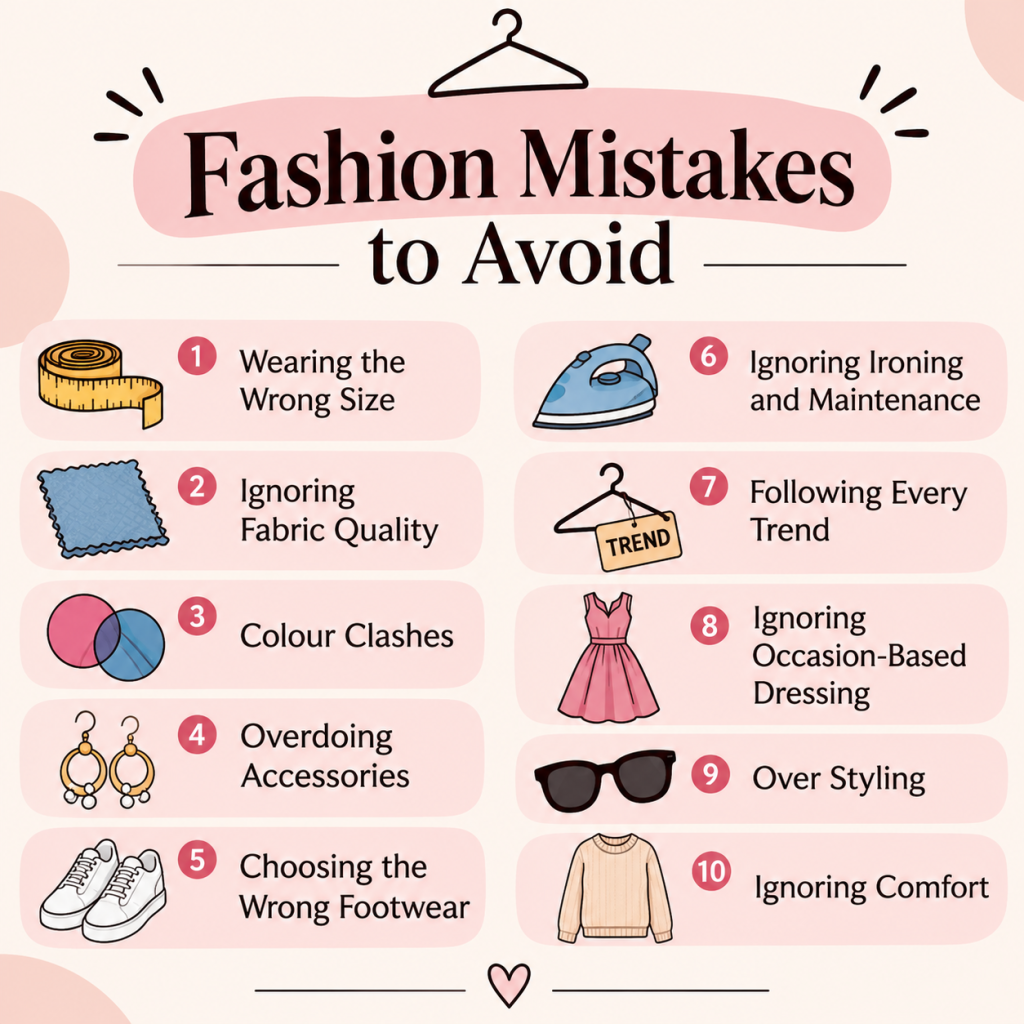
1. Wearing Clothes That Do Not Fit Properly
Fit is one of the most important parts of good style. A simple outfit in the right size can look far better than an expensive outfit that is too tight, too loose, or poorly shaped.
Clothes that are too tight can feel uncomfortable and restrict movement. On the other hand, clothes that are too oversized may hide your shape and make the outfit look unfinished. Neither extreme is a fashion rule; the goal is to find a fit that feels comfortable while giving your outfit a clean, intentional look.
Pay attention to areas such as the shoulders, waist, sleeves, and trouser length. Shoulder seams should usually sit close to the edge of your shoulders, sleeves should not cover your hands, and trousers should not bunch excessively at the ankles. Personal stylists often recommend focusing on fit rather than the number printed on the label, since sizing can vary widely between brands.
If a piece fits well in most areas but needs a small adjustment, tailoring can make a big difference. A simple alteration to the waist, hem, or sleeves can make an ordinary garment look much more polished.
2. Ignoring Comfort
Fashion should never feel like a punishment. Looking stylish does not mean wearing shoes that hurt, fabrics that itch, or outfits that make it difficult to sit, walk, or move naturally.
Comfort and style can go together. When you feel physically comfortable, you naturally carry yourself with more confidence. Choose breathable fabrics, especially for everyday wear, and make sure your clothes allow easy movement.
Natural fibres such as cotton, linen, and wool are often praised for their breathability, durability, and drape. If you choose synthetic fabrics, look for good-quality blends and check that the fabric does not pull, wrinkle awkwardly, or feel overly stiff.
Before buying something, ask yourself a few simple questions: Can I move easily in this? Will I feel comfortable wearing it for several hours? Does it suit the weather and my daily routine? If the answer is no, it may not be worth adding to your wardrobe.
3. Following Every Trend Blindly
Trends can be fun and inspiring, but they should not control your entire wardrobe. Not every viral style will suit your body shape, personal taste, climate, or lifestyle.
Buying something only because it is trending often leads to clothes that are worn once and then forgotten. Instead, use trends as inspiration. If a trend genuinely matches your style and you can see yourself wearing it more than once, try it. If not, let it pass.
A strong wardrobe usually includes a mix of timeless basics and a few trend-led pieces. Classic items such as well-fitted jeans, neutral tops, comfortable footwear, and simple outerwear can be styled in many ways. Trendy accessories or statement pieces can then add personality without making your entire wardrobe feel temporary.
Style is personal. The best outfits are often the ones that reflect who you are, rather than the ones that look exactly like everyone else’s.
4. Overloading Accessories
Accessories can elevate an outfit, but too many at once can make it feel cluttered. Jewellery, bags, belts, scarves, hats, and statement shoes all have a place—but balance matters.
If you are wearing bold earrings, a colourful bag, layered necklaces, and patterned shoes, the outfit may begin to compete with itself. Instead of adding more, choose one or two focal points.
For example, if your outfit is simple, a statement bag or bold earrings can add interest. If your clothing already has strong prints, bright colours, or detailed embroidery, keep accessories minimal so the outfit remains balanced.
Before leaving home, look at your outfit as a whole. Ask whether every accessory serves a purpose. Styling advice often suggests choosing accessories intentionally rather than adding pieces simply because an outfit feels incomplete.
5. Wearing the Wrong Outfit for the Occasion
Dressing well is not only about looking good; it is also about dressing appropriately. An outfit that works for a casual brunch may not be suitable for a formal event, an office meeting, or a family function.
Before choosing an outfit, consider the setting, dress code, weather, and overall atmosphere of the event. You do not need to follow strict rules, but being mindful of the occasion shows thoughtfulness and helps you feel more at ease.
For example, a heavily embellished outfit may look beautiful at a celebration but feel out of place at a casual coffee meetup. Similarly, very casual clothing may not be ideal for a professional setting. When in doubt, choose a slightly polished version of the expected dress code.
Planning your outfit in advance can also reduce last-minute stress. Taking a few minutes the night before to decide on clothing, shoes, and accessories can help you leave home feeling prepared.
6. Neglecting Fabric Quality
The way clothes look is not only about colour and design. Fabric quality plays a major role in how an outfit sits on the body, how long it lasts, and how comfortable it feels.
Cheap-looking fabric can make even a stylish design appear less refined. Look for clothes with clean stitching, even patterns, sturdy seams, and a finish that feels substantial rather than thin or flimsy. Avoid pieces with visible pulling, puckering, or poorly aligned prints.
This does not mean every item needs to be expensive. It means choosing quality where it matters. Everyday basics, denim, outerwear, shoes, and garments you wear frequently are worth investing in because they will last longer and look better over time.
Good fabric also improves comfort. Breathable, soft, and well-made materials can make a big difference, especially in warm weather or during long days.
7. Ignoring Colour Balance
Colour can completely change the mood of an outfit. Wearing colours that clash, choosing shades that wash you out, or combining too many bold colours at once can make an otherwise nice outfit feel unbalanced.
You do not need to memorise complicated colour rules. Start by noticing which colours make you feel confident and which ones you enjoy wearing. Neutrals such as white, black, beige, grey, navy, and denim blue are easy to pair with many other shades.
If you enjoy bright colours, you can still wear them. Try pairing one bold colour with neutral pieces, or choose colours in similar tones for a more coordinated look. Patterns can also work well when balanced with solid colours.
The goal is not to avoid colour—it is to use it with intention. A thoughtful colour combination can make an outfit look more polished without requiring extra effort.
8. Forgetting About Proportions
Proportion is one of those subtle styling details that can make a big difference. It refers to how the different parts of your outfit relate to each other, such as a loose top with fitted bottoms or a structured jacket with relaxed trousers.
Wearing oversized pieces from head to toe can sometimes make an outfit look shapeless. Similarly, wearing everything very fitted may feel restrictive or less comfortable. Creating balance helps the outfit look intentional.
For example, if you are wearing wide-leg trousers, a slightly fitted or tucked-in top can create balance. If you are wearing a loose kurta or oversized shirt, pairing it with more structured bottoms can keep the silhouette clean.
Focus on balance and proportion rather than trying to dress for a particular body type. Well-fitting trousers, structured layers, and necklines that suit your frame can help create a more flattering overall look.
9. Wearing Wrinkled or Uncared-For Clothes
Even a beautiful outfit can lose its impact if it is wrinkled, stained, pilling, or poorly maintained. Clothing care is an underrated part of personal style.
Take a moment to check your outfit before stepping out. Make sure clothes are clean, pressed where needed, and free from loose threads or visible stains. Check that accessories are in good condition too.
Taking care of your clothes also helps them last longer. Follow washing instructions, store delicate pieces properly, and repair small issues before they become bigger problems. A wardrobe that is well maintained will always look more refined than one filled with neglected clothing.
10. Dressing for Others Instead of Yourself
Perhaps the biggest fashion mistake is wearing something that does not feel like you. Fashion advice can be helpful, but no trend, rule, or opinion should make you feel uncomfortable in your own clothes.
You may love bold colours, minimal styles, traditional wear, streetwear, feminine silhouettes, or a mix of everything. That is completely fine. Personal style develops when you pay attention to what makes you feel confident, comfortable, and expressive.
Instead of asking, “Is this trendy?” ask, “Do I feel like myself in this?” The answer to that question matters more than following every styling rule.
Final Thoughts
Fashion mistakes are normal, and nobody needs a perfect wardrobe to look good. Style improves with awareness, practice, and a better understanding of what works for you.
Focus on fit, comfort, quality, balance, and occasion. Choose pieces you genuinely enjoy wearing, take care of them, and do not be afraid to experiment. The most stylish outfits are not always the most complicated ones—they are often the ones that feel natural, confident, and effortless.
Your clothes should support your personality, not hide it. When you dress in a way that feels authentic, you do not just look better—you feel better too.